Rainfall-Driven Geohazards
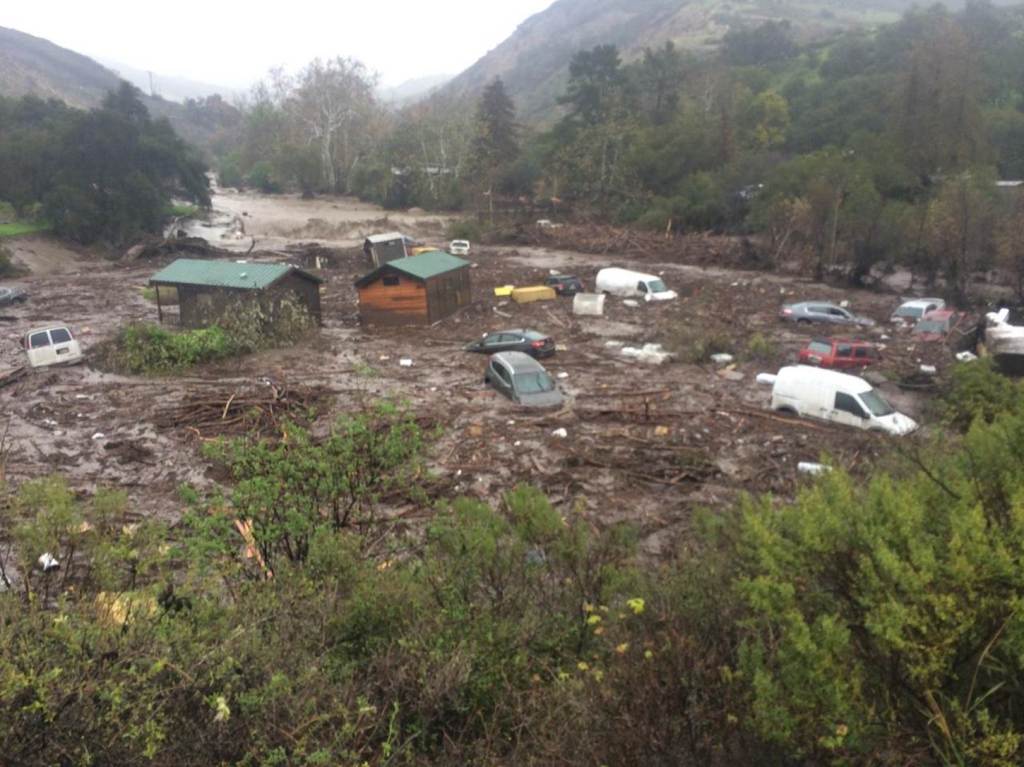
My research aims to improve understanding and forecasting of the atmospheric processes producing rainfall that triggers geohazards such as landslides and postfire flood and debris flows. Often, these events are associated with bursts of high intensity rainfall driven by small-scale (mesoscale) meteorological processes resolved by high-resolution (<4 km) atmospheric modeling.
Photo: Postfire debris flow on Sherpa Fire in El Capitan Canyon, Santa Barbara County
Precipitation Extremes and their Impacts
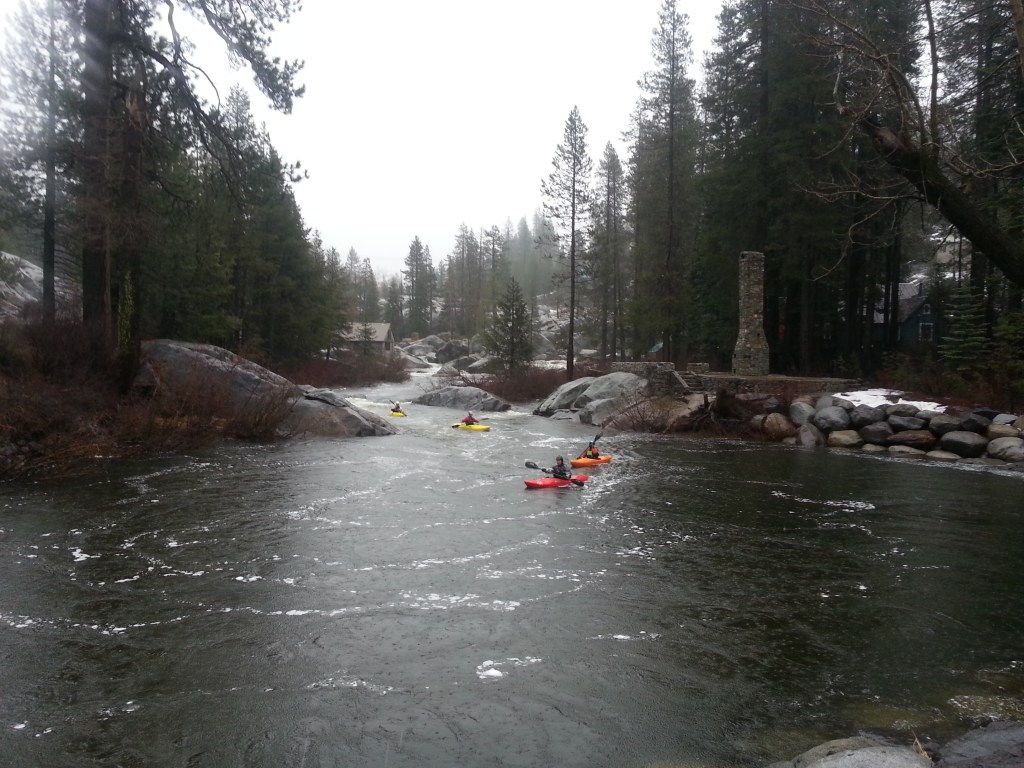
I am interested in monitoring and understanding drivers and predictability of precipitation extremes across timescales, from subhourly to annual. Evaluating the conditions leading to past extreme precipitation events can help determine how these extremes will change in a warming climate. I aim to apply this knowledge to inform preparedness and resilience to flood, geologic, and wildfire hazards, water resource availability, and agriculture impacts.
Decision Support Tools and Early Warning Systems
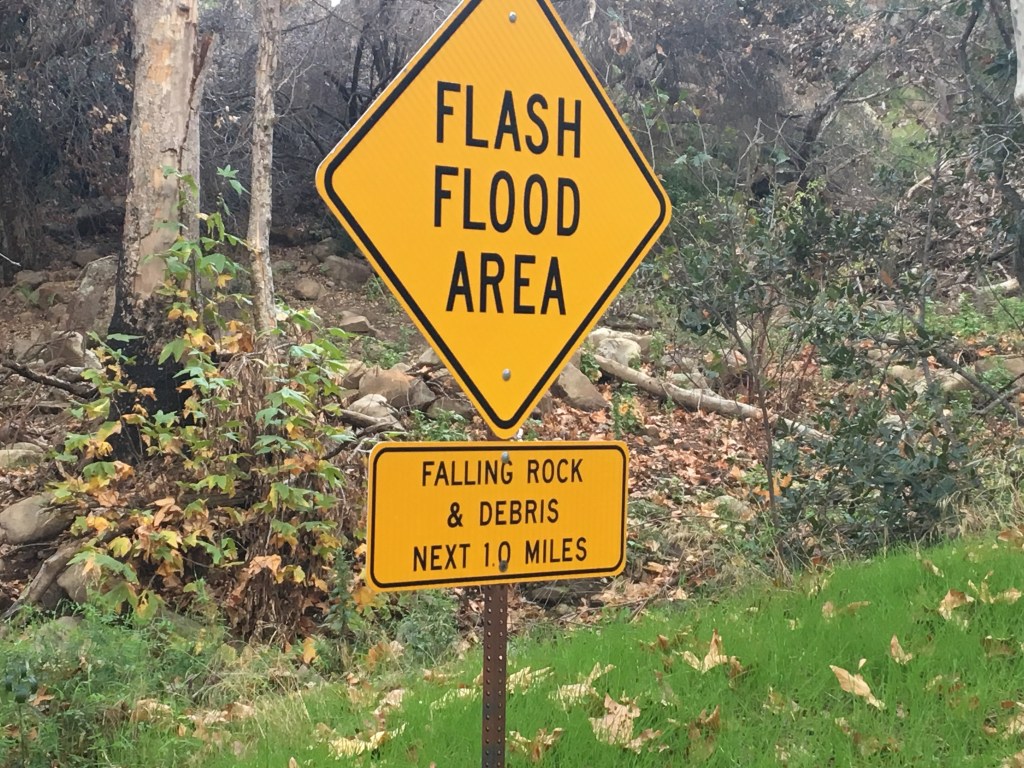
The early part of my career focused on designing web-based tools that provide decision support related to weather and climate information. Such tools allow people from a range of backgrounds to access and visualize climate data in ways that address their particular questions and needs. More recently, working in geohazards, I am interested in designing tools that combine weather and climate information with geological and other land surface information to provide early warning for geohazards. This requires interdisciplinary collaboration across the fields of meteorology, geology, hydrology, engineering, and social science.

Wildfire and Prescribed/Cultural Fire
Working on postfire hazards led me to complete wildland firefighter training. This sparked my interest in weather and climate factors affecting wildfire and the ability to conduct prescribed and cultural fire operations. I have been learning about fire behavior and ecology through volunteer work as a prescribed fire practitioner, coursework, lectures, and trainings. I share my knowledge of weather and climate with fire colleagues to help inform their work. Being a student of fire has improved my skills as a postfire hazards scientist and exposed me to new areas of scientific inquiry.
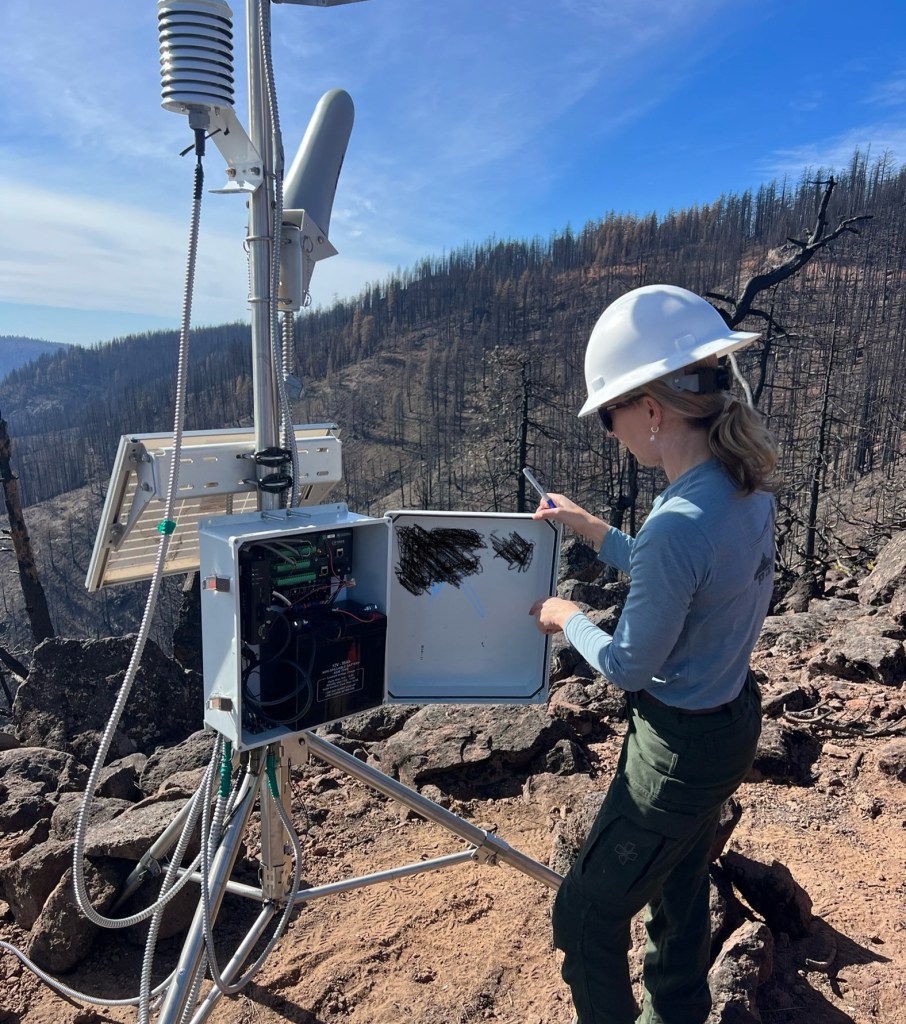
Surface Weather Station Observations
I am interested in all aspects of surface weather observations including equipment characteristics, understanding telemetry mechanisms and data streams, quality control, data accessibility and data display. I am always learning something new on these topics! I aim to be a good steward of weather and climate data. Whenever I have the opportunity, I advocate for quality, long-term climate observations as these are essential to understanding how our climate is changing, assessing climate model performance, and making decisions that support our resilience and adaptation.
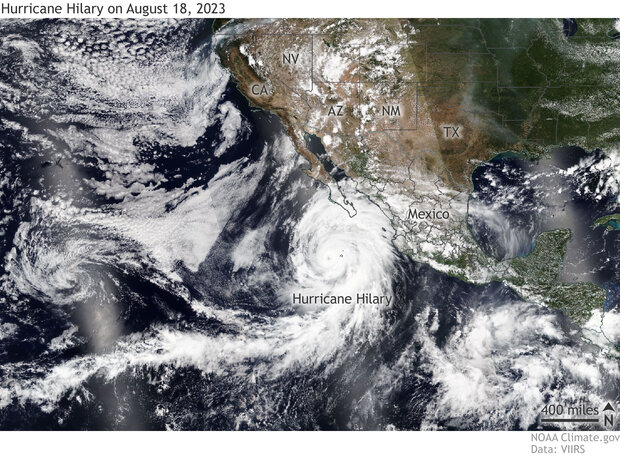
Impacts of Tropical Systems in Western US
Decaying tropical systems often lead to intense thunderstorms in the Southwest US in the late summer and autumn seasons. These thunderstorms can produce extreme runoff responses such as flash floods and debris flows in burned and unburned areas. I would like to investigate the climatology of decaying tropical systems impacting the Southwest and evaluate how the frequency of these systems and the intense rainfall they produce may change in a warming climate.
Image: NOAA climate.gov/VIIRS

Education and Outreach
I was a science educator in my first career and have retained my passion for education as a research scientist. I enjoy giving talks and trainings on weather and climate to students from K-12 through adult in formal and informal educational settings. I aim to include “hands-on” elements of some sort and relate the topics of discussion to the everyday lives of members of my audience. I hope to inspire the same wonder I have for weather and the Earth system in others and help them find trustworthy sources for weather and climate information.

Increasing Diverse Representation in the Geosciences
I have been educating myself on why there is a lack of diversity in the geosciences and ways that we can develop policies and practices that allow for all people to thrive in geoscience environments. This has included participating in Unlearning Racism in the Geosciences “pod” at UCSD, evaluating my own biases and practices and aiming to create a more inclusive environment, and encouraging and supporting people from diverse backgrounds to promote retention.
 Nina Oakley, Ph.D.